


I was eighteen years old when my dad walked in and said, “I booked us a fly-fishing trip on the upper Willamette.”
I was confused. We never did anything like this. And the Willamette River I knew was a slow, wide river that crept through downtown Portland before dumping into the Columbia. Salmon ran through in the high water of spring, but trout on a fly? Still, I wasn’t about to turn it down.
We drove an hour and a half south through the Willamette Valley, turned east near Eugene, and climbed into the Cascades. Forty minutes up the mountain highway, we pulled onto a gravel road that ended at a small parking area. A lone drift boat sat beached beside a narrow ramp, and a man sat inside it, rigging rods.
“Hi, I’m Bob,” he said. “Ready to cast some flies?”
We pushed off. It was the first of thirty years of trips with Bob down the Willamette, the McKenzie, and the Deschutes.
I’ve always been a do-it-yourselfer. From hunting and fishing with my dad and grandpa as a kid to self-guided wilderness floats in Alaska, there’s something satisfying about pulling off a trip on your own. But looking back, some of my best skills, and some of my best memories, came from days in the boat with two guides. Bob was the first.
Bob seemed more like a college professor than a fishing guide. He grew up on the East Coast and went to Syracuse before coming to the University of Oregon to study mathematics, which he admits was a cover for fly-fishing.
That intellectual, inquisitive mind made him an exceptional guide. He noticed everything: the river conditions, the bugs, the fish. He could even predict how good a day we’d have from the weather. One morning in early June, we met him at the boat ramp. Dense clouds packed the canyon, and the air was warm. A light mist came and went.
He looked up from his seat in the boat and gave us a slight grin.
“I hope you’re ready. Today’s going to be excellent.”
And he was right. Every run, riffle, and eddy was full of 16- to 18-inch wild rainbows eager to attack our dry flies. He called them “whoppers,” and knew that the combination of weather conditions that day got the bugs and the big fish moving.
Every trip was a master class. Bob taught me to cast for distance and into the wind, to fish dries, wets, and nymphs, and to know when to combine them. He taught me to read water and find the unassuming spots that held fish. We practiced re-floats, high-sticking, and when to give the fly a little action to entice a bite. Underneath all of it was the most important lesson: presentation is king.
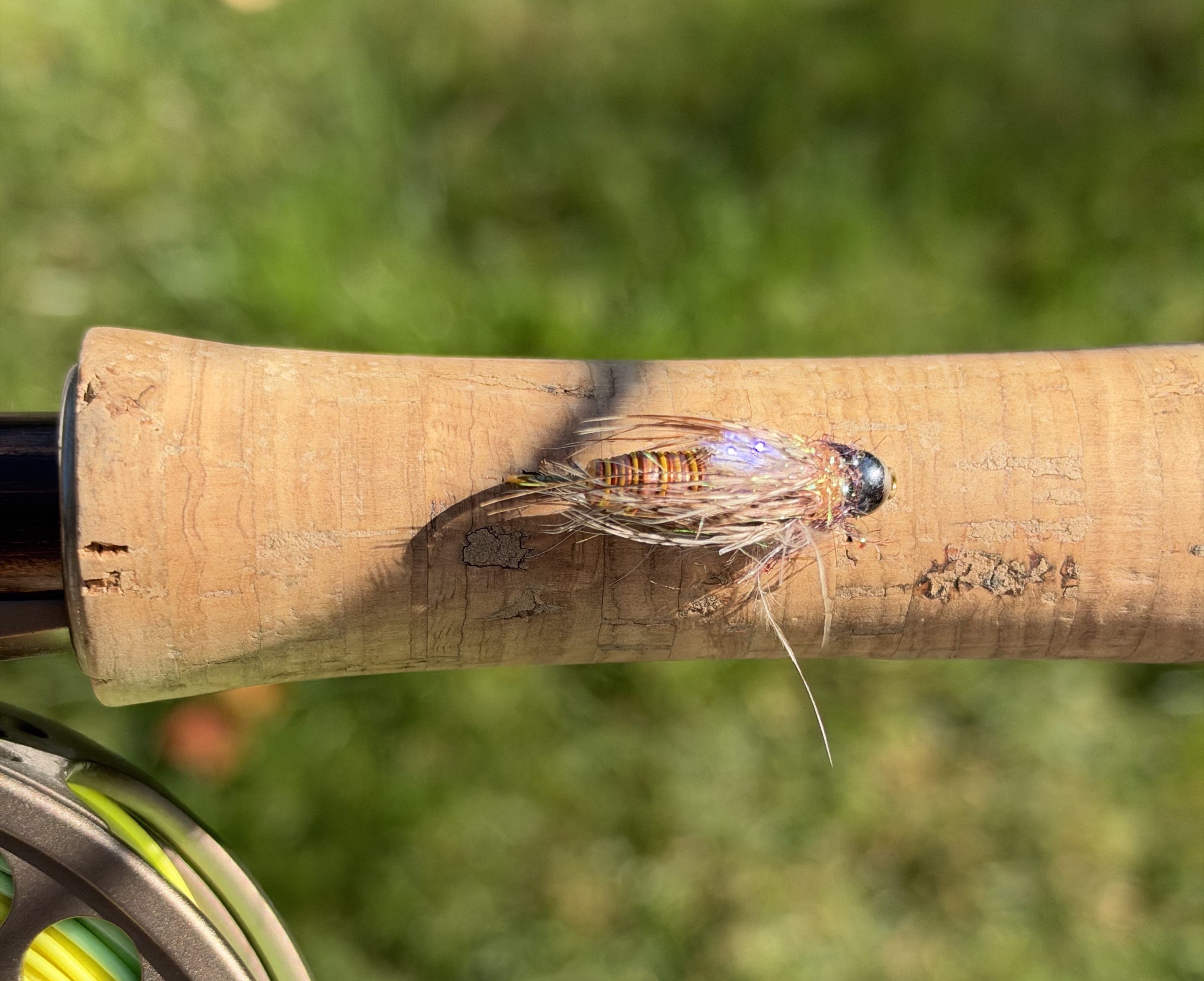
Maybe that’s why his flies never looked quite like anything you’d find in a fly shop.
“What’s the name of this fly?” I’d ask.
“Oh, it’s just something I tied up,” he’d say.
I could never figure out whether he was protecting a secret or simply didn’t have a name for the thing he’d created.
We’d mix in trips down sections of the McKenzie River that held planted rainbows along with native fish. We were allowed to keep some of the planters, so Bob would pull over for a riverside lunch. He’d build a fire, pull out a big cast-iron skillet, and cook the most wonderful butter-fried trout. He even had a trick for prepping the fish for a seasoned-flour crust: after cleaning it, he’d pull the head back, and the whole skin would peel off in one piece.
A few times, we took multi-day floats down the Deschutes, covering 35 miles in three days. Those were more like trips among friends than guide-and-client outings, and my dad brought his own drift boat. We spent the days fishing under the hot July sun and the nights camped along the river, watching clouds of caddis flies gather in the trees. It was there that I honed the craft of casting in the wind and rowing through powerful rapids.
One of my best memories comes from those Deschutes trips. I remember standing on a long, skinny rock, casting straight upstream into a slot about five feet wide, with Bob right at my side, coaching me. I hooked a big, fat Deschutes redside on eight consecutive casts. We laughed at how ridiculous it was.
As the years passed, the fishing slowed, mostly because of declining fish populations and changing river conditions. We’d still catch fish, just not as many, and the big ones were fewer and farther between. Cloudy June days became more of a rarity, and we found ourselves arriving at the boat ramp under sunny skies more often. As Bob got older, he couldn’t hold the boat in fast current the way he used to. Some of the runs became one-shot chances.
But no matter the results, the camaraderie remained. It was like fishing with an old friend who was happy just to row the boat.
Our last season together, we pulled up to the boat ramp and found Bob sitting in a wooden drift boat he’d restored. I started fishing in my grandpa’s wooden drift boat. This time, my son was in the boat with us.
Bob retired this year, and our time on the water together has come to an end.
I’ll be forever grateful for a guide who cared more about teaching than about how many fish we caught.
Next week, Part II: a different guide, a different corner of the Northwest, a whole different set of skills, and the fish that tests every one of them: steelhead.
— Jason