


If you spend enough time outdoors, something less than desirable is eventually going to happen.
Even with planning, training, experience, and precautions, sometimes the stars align in the wrong direction. You hope the impact is minimal and recoverable. Most times it is.
Locking your keys in the car.
Slipping and falling while wading an ice-cold stream.
Stepping in a hole.
Touching an electric fence.
Getting temporarily lost.
But sometimes a harmless event stacks on top of another event to create a much larger problem.
In March of 2010, on a winter steelhead float down the North Santiam River, a series of extraordinarily unlikely events lined up one after another and nearly ended in tragedy.
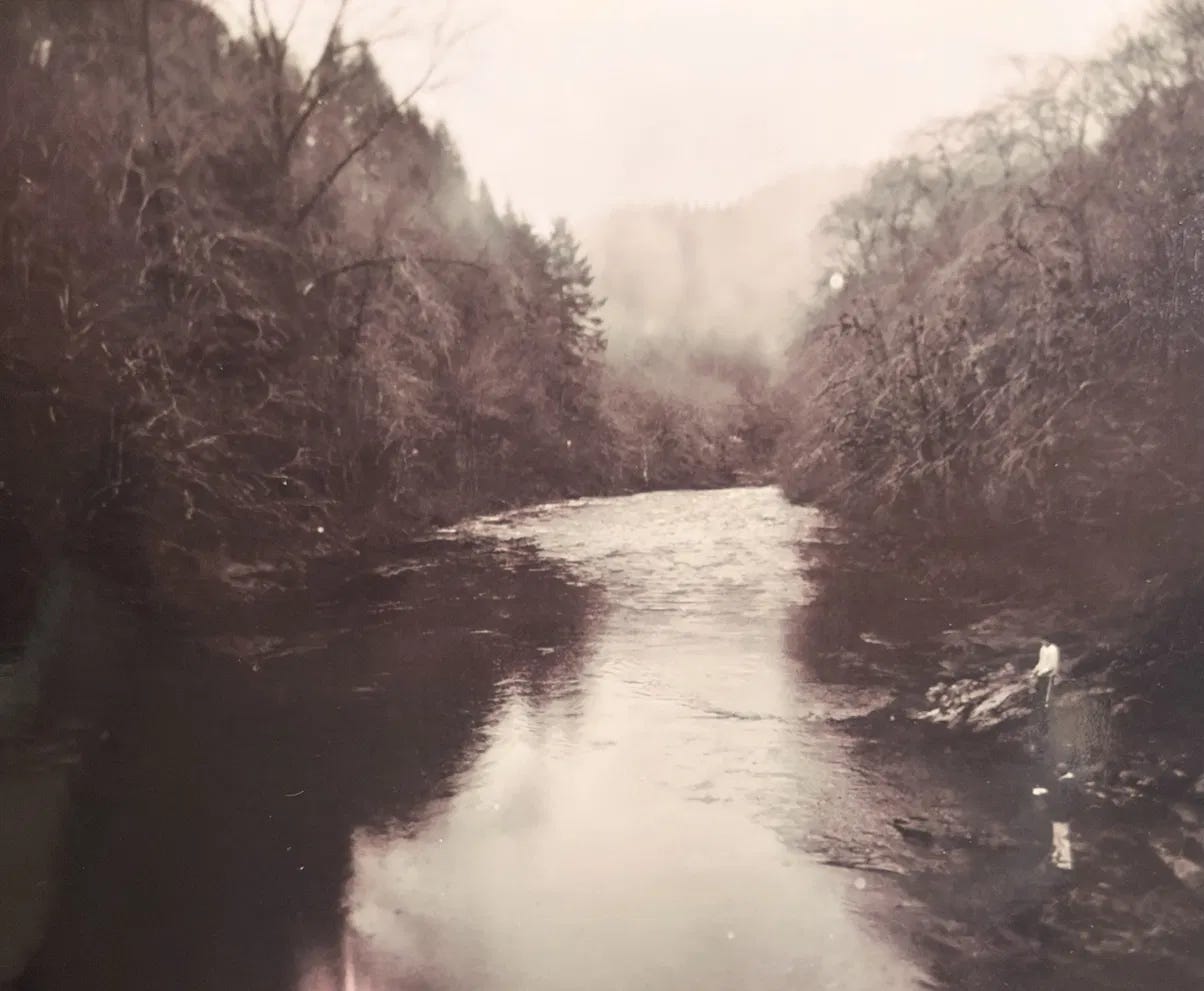
Some background first. I grew up spending summer weekends in my grandpa’s wooden drift boat. Our home water was the North Santiam, a beautiful, smallish river that flows out of the Cascades and eventually into the Willamette in western Oregon. It’s a classic riffle-run stream, complete with some wicked rapids that can fool even accomplished oarsmen.
We chased trout back then, and it’s where I first learned to fly-fish and row a drift boat. It’s also where I learned that summer steelhead like to hang out in morning tail-outs.
My dad and I would drive thirty minutes to my grandpa’s house, where I’d watch them hook the boat up to the truck and try to get the trailer lights to work.
My job was to stand behind the trailer and tell them whether the blinkers and brake lights were working. They never were.
“Left blinker. Anything?”
“No,” I’d reply.
“Are you sure?”
“Yes.”
Then they’d mess with the wires for a few minutes and we’d try again. This went on for about fifteen minutes until they finally gave up and accepted that one brake light and a right blinker would suffice.
Once we hit the road, it wasn’t exactly smooth sailing either. There were always some…challenges.
Like the time the trailer came unhitched from the truck on the highway.
Or the broken oar on the first rapid, with no spare.
Or the time we explored a new section of the river and ended up bouncing off rocks through one rapid, lining the boat through another, and eventually taking out a mile upstream from our vehicle.
Or the time we ran Buckskin Mary Rapids on the Deschutes. Normally it’s pretty harmless, just a series of extremely large standing waves. You can slide around them or take them head-on, but there’s no margin for error outside those two options. My dad had just bought a new 16-foot Alumaweld drift boat. He was rowing solo, and I was in another boat just behind him. As he entered the rapid, a gust of wind lifted his fly rod up and out of the boat. He reached for it, and his hands left the oars. That was all it took. The boat turned sideways, and the first standing wave crashed in, filling it halfway. We watched in horror. Somehow he managed to row to shore, the waterlogged boat barely floating above the surface. We spent the next forty-five minutes bailing.
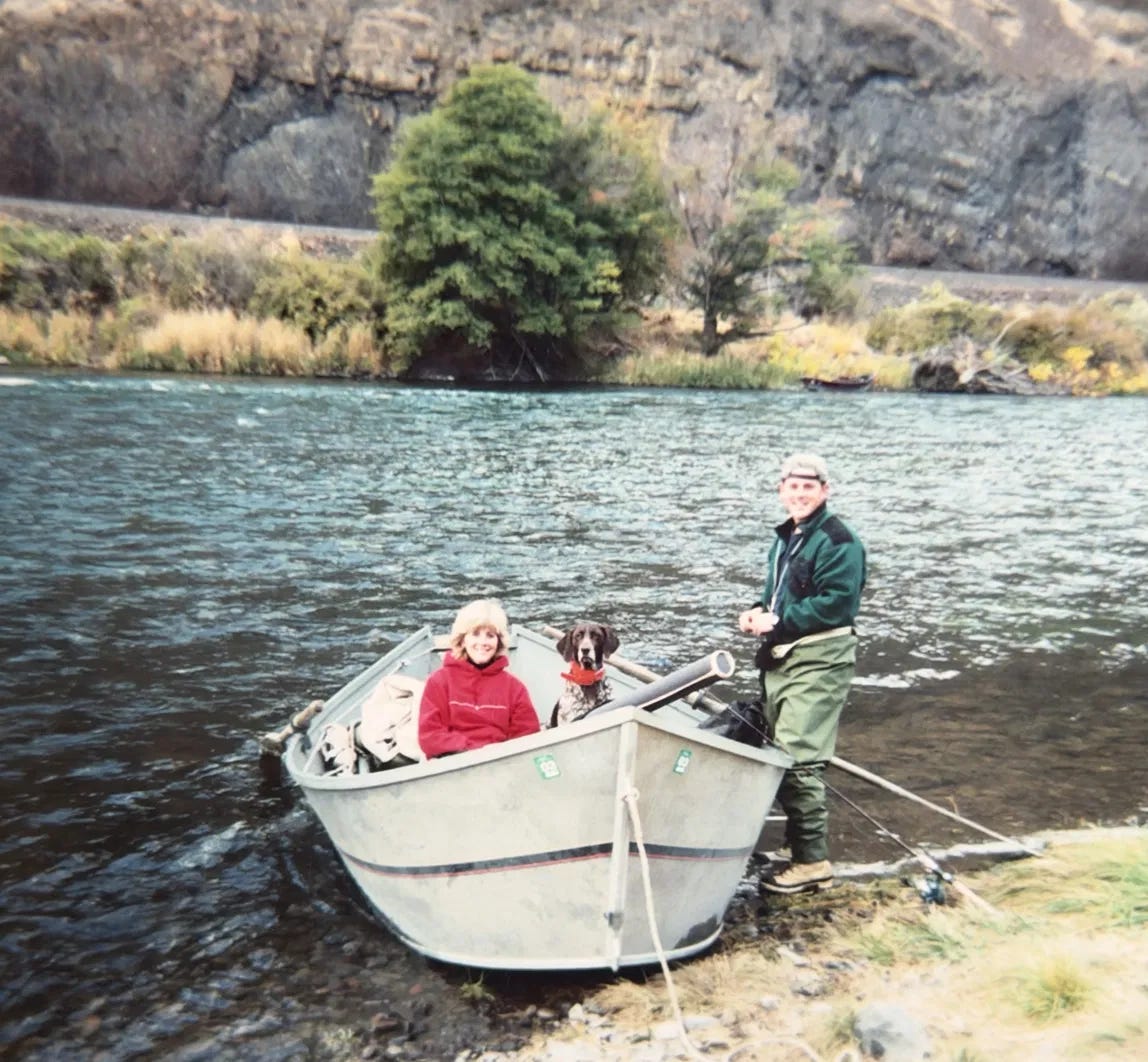
Now, my dad is a fantastic outdoorsman, but for some reason his skillset doesn’t translate well to whitewater drift boat operation. I suppose he was also a pioneer, exploring new adventures for the first time. I’ve definitely learned from those mistakes.
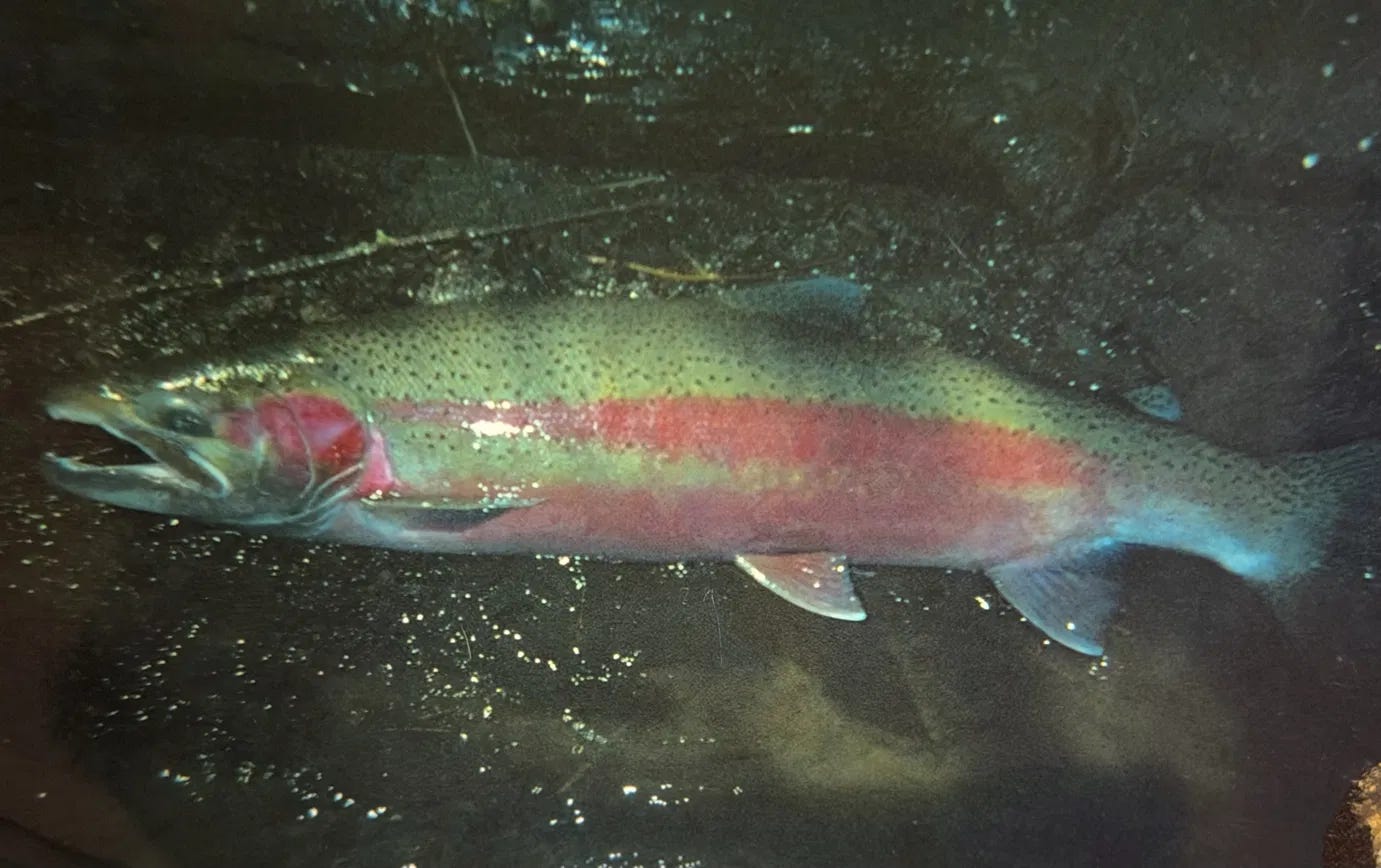
On this particular day in 2010, my dad, a buddy of mine, and I decided to try our luck in that same Alumaweld. My friend was an avid fly fisherman from Idaho but had never gone steelhead fishing before. The North Santiam gets a run of wild winter steelhead. They’re large and aggressive. On average, they’re the largest steelhead I’ve caught anywhere, with many fish estimated in the teens. It was a fantastic fishery, and there were many more fish back then. The run has struggled over the last decade.
March was prime time. The river was swollen from recent rains, but it had dropped enough that the color was perfect. Low clouds hung in the canyon, and daytime temps warmed into the low 50s.
We drifted about half of our ten-mile float without any action and pulled over on a small island for lunch. The island was nothing more than a strip of exposed river rock covered in young willows, still leafless for winter. There was just enough open ground to set up my portable grill. We scarfed down grilled chicken sandwiches, which warmed us from the inside and gave us much-needed energy for the rest of the float.
As we pushed off, three things happened in quick succession: my friend made a cast, one of our spare rods snagged in a willow and started pulling out of the boat, and a large steelhead hammered the spinner that had just hit the water. Chaos ensued.
Just as my friend yelled “Fish on!” I saw the rod being pulled out the back of the boat. My dad was on the oars and reached back but couldn’t grab it before it hit the bank. We should have rowed back to shore, grabbed the rod, and kept fighting the fish. But the steelhead was ripping line downstream, helped by the heavy spring flow.
We decided to follow the fish downstream, land it, and motor back for the rod. (Mistake #1.) The drift boat had an 8-horse Yamaha we used for going back upstream after drifting through a run so we could fish it again, a trick we’d learned from a steelhead guide on the Rogue.
But the fish ran so far that we were in danger of drifting through the run and into a rapid, at which point we couldn’t motor back to the rod. Instead of starting the motor and having it ready, my dad dropped the anchor to keep us out of the rapid. (Mistake #2.)
The current was too strong for the anchor to hold. We kept drifting toward the rapid, now dragging an anchor along the bottom behind us. It was too late to use the motor.
We entered the rapid and couldn’t maneuver, because we were still tethered to the bottom of the river. We should have cut the anchor rope to get our mobility back. We didn’t. (Mistake #3.)
With little control, we were headed straight for a large cottonwood that had fallen into the river. My friend was still fighting the fish, and somehow I managed to net it just before the side of the boat slammed into the tree. The net got smashed between the tree and the boat and bent in half.
We took a split second to assess. It seemed like we were still okay. If we could free the anchor, we could spin off the tree and keep floating downstream. Then my friend stood up, slipped, and fell against the upstream side of the boat. (Mistake #4.) Water rushed in. He recovered and the boat leveled, but it was too late. We got off the tree, but with water in the boat, we couldn’t control it. The current was carrying us toward the far bank, which would have been fine, except for another downed snag in the water.
As we neared the bank, we braced to abandon ship and leapt out onto shore together. Two seconds later, the boat hit the snag and filled completely. The hydraulic force of the river shoved it underwater and pinned it against the tree.
I was still holding the bent net with a large winter steelhead in it. I released it back into the river. It was my friend’s first steelhead, and he never even got to hold it.
Catching it was supposed to be the hard part.
We stood there together in shock for a few moments before shifting into problem-solving mode. After a few minutes of trying to pull the boat free, we knew it was impossible. Our only way out was on foot, and we were on the opposite side of the river from the highway.
To make matters worse, we’d wrecked on an island, which meant crossing a channel to reach the bank. Fortunately, we all had chest waders on. We waded across slowly, arm in arm, the fast-moving water past our waists.
We hiked up the hill through thick brush to get a better vantage point and came out on a small two-lane road. There was no cell service, and this was before offline tools like onX, so we started walking the road downstream until we came to a small house in the woods. Figuring it was a good chance to call the sheriff, we walked down the long driveway and knocked.
A woman answered the door without saying a word. We explained our situation and asked if we could use her landline to call for help. She gave us a deadpan stare and said:
“You better get outta here before Pa gets home.”
This was not the response we were expecting, but we understood exactly what she meant. We turned and ran back to the road, then a few hundred yards more.
We walked in silence for thirty minutes until we heard a truck coming up behind us. We had a quick debate about whether this was Pa coming for us and whether we should dive into the bushes, but decided to stick out our thumbs. A nice older gentleman pulled over and offered to drive us to town. We gladly hopped into the truck bed.
A few months later, when the water had dropped, a local river guide took some volunteers down to the wreck and cut the boat loose. The force of the water had bent the right side, making it wider and a little lower. They were still able to float it to the ramp, and we still use that boat today, just not on technical water because of the low side.
There was one final encore. When the guide called to tell me the boat was ready to pick up, he walked me through the recovery, including the detail that nudie playing cards were scattered around the crash site. A different friend had bought them and left them in the boat after an earlier boys’ trip down the Deschutes. The guide thought this was hilarious, and I can’t imagine he didn’t say something to my dad when he picked up the boat. I’m sure my dad was embarrassed, but he never mentioned it. Sorry, Dad.
Writing this down, I’m struck by how unbelievable it sounds, and how lucky we were to walk away.
None of the four mistakes was dramatic on its own. Chasing the fish instead of the rod. Dropping the anchor instead of starting the motor. Hanging on to the anchor instead of cutting it. Standing up in a boat pinned against a tree. Each one took away a little more control until we had none left. And both of the worst days in that Alumaweld started the same way: a rod leaving the boat and somebody reaching for it.
The anchor is the one I think about most. We were dragging it, still holding on, when the right move was to cut it loose. When things start stacking up, figure out what you’re dragging and let it go. Sometimes you’re only moments from disaster.
— Jason
Uphill & Downstream is stories and know-how from 40+ years of hunting and fishing the Northwest: the good days, and the ones like this. Free in your inbox.