


If you asked me to pick my favorite outdoor activity, I’d probably take a minute, running through everything I’ve done. But deep down, the answer is always chukar hunting.
I started back in the late 1980s with my dad and no dog. We were definitely early adopters of the sport. If you told someone back then you were going chukar hunting, they’d give you a confused look and respond with a “huh?”
Looking back, I can’t even believe we used to attempt this without a dog. What stands out in my mind from back then are the same things I experience now: death climbs, birds exploding out of nowhere and ripping downhill at Mach 2, and the sweet feeling of triumph when a bird crumples and hits the slope.
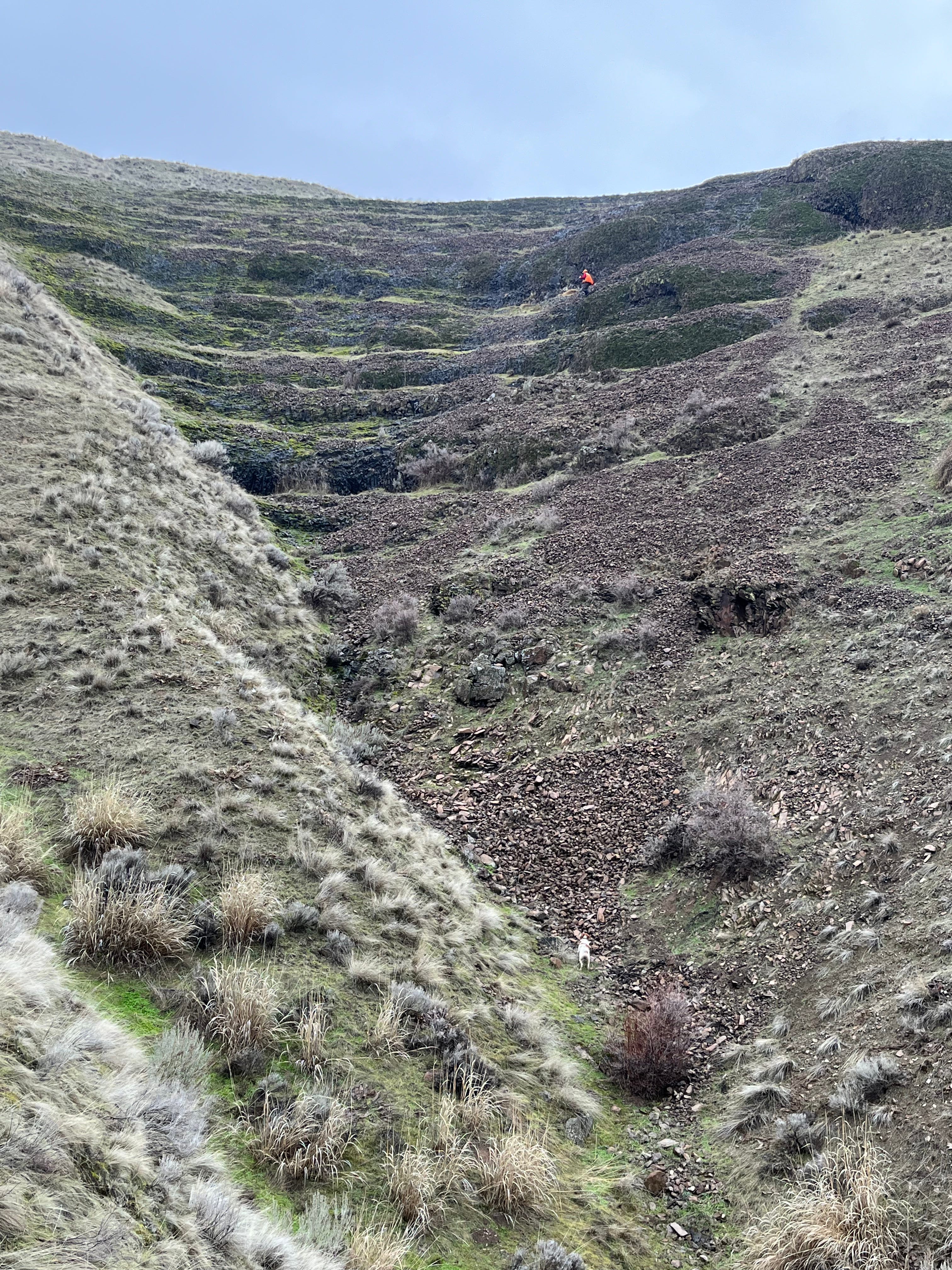
Most hunts start at the bottom of the canyon and require an insane vertical climb. It’s one of those activities that requires a pep talk at the beginning. Traversing up the hill usually begins with a thought of “this isn’t so bad” and ends with burning legs, a heart beating out of your chest, and crushing dejection as you crest what you thought was the top, but was actually a false peak. Add snow or ice and it gets much harder.
Let’s talk about the dog for a minute, because if you ask me what my favorite part of the whole thing is, I’ll tell you it’s watching the dog work.
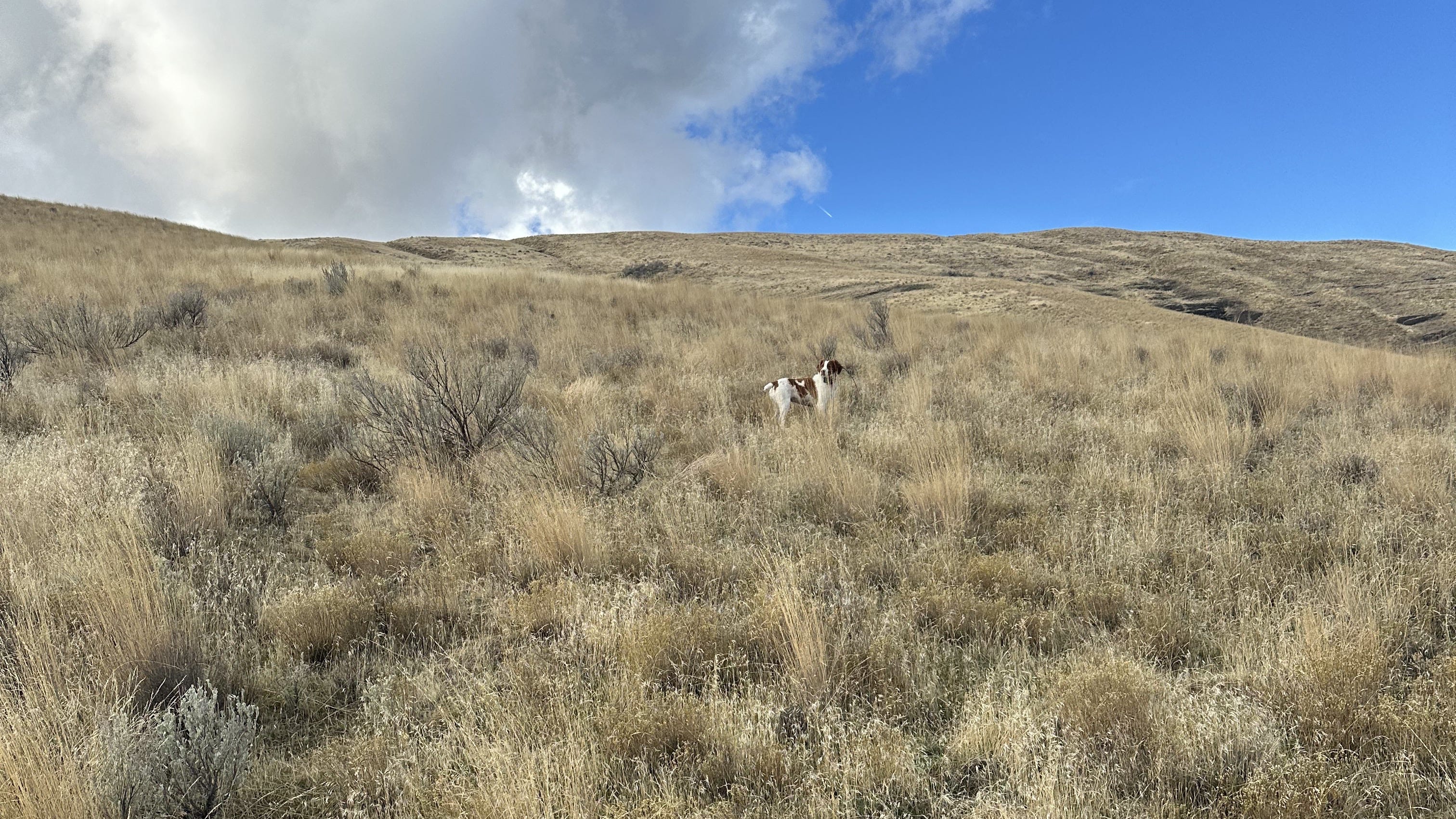
If you’ve never seen a pointer work in chukar country, you wouldn’t believe it if I told you what they can do. I have a Brittany named Remy, and she shares my passion for the sport. It starts the night before when I pull out the hunting vest, dog collar, and gear. She jumps around with excitement and stays glued to my side, making sure I don’t leave without her. Gear is loaded in the predawn hours and we’re off through the Columbia River Gorge. As soon as we break out of the wet, timbered west side of the Cascades and into the dry sagebrush landscape and rimrock canyons of Eastern Oregon, she smells the change and starts breathing hard and fast.
When we arrive, I’ve learned to get completely geared up and ready to go before I let the dog out of the truck. Once I let her out, it’s like a white and orange rocket ship ripping up the hill. She’s not waiting around for me to get myself ready.
I’ve also learned that water and snack breaks require a leash. Without one, she’s constantly trying to sneak away to catch the next scent. Resting for bird dogs doesn’t happen until the car ride home.
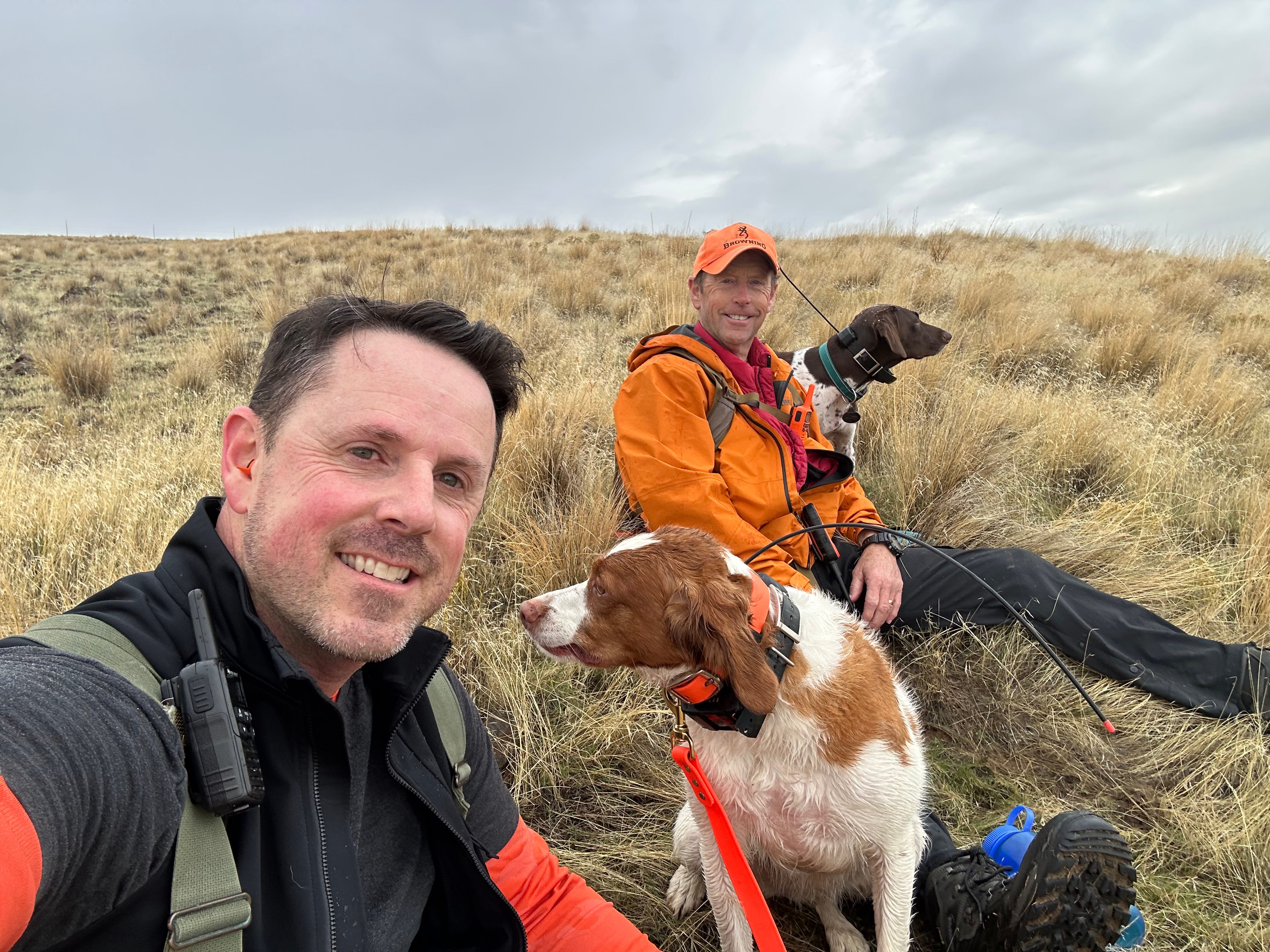
I love watching my dog cover tens of miles of ground, up and down steep canyons, over and through rimrock, and slopes of scree. After a few outings, you become completely in tune with the dog and can see the change in movement that signals a catch of scent. Whether it turns into a stalk or a sudden jerk to a point, my heart races with the anticipation of an exploding covey of birds.
When a bird hits the ground, my dog is happy to find it, give a quick sniff, and then she’s off to find the next covey. I always want this to be a bigger moment with her where we can take a minute to celebrate together, but she understands her job better than I do.
We as humans think we know best. We look at maps and build strategies based on experience and what we’ve been told. But we can’t smell the birds.
Two seasons ago, I was reminded of the golden rule: always follow the dog. We were hunting along the top of a ridge and I wanted the dog to work the tops of the draws on our left side. We hadn’t seen any birds all day and I was getting antsy, which is why I was irritated when she insisted on disobeying me and trying to hunt the slope on the right side of the ridge. After repeated callbacks and tones, she finally just ignored me and took off. Not more than thirty seconds later, my handheld beeped. I raced across the ridge and found her rock-solid on point. A covey of thirty or so birds came off the slope out of range. They coasted across and down the canyon for what seemed like miles — too far to chase. I would have had a great shot if I had only trusted her nose. We never saw another bird that day.
There’s a lot of advice out there about how to properly hunt chukar. What I can say after chasing them for decades is that “they are where you find ’em.” Sometimes they are where you think they’ll be, but other times, they are where you think they would never be.
One fairly constant truth is that different coveys usually occupy a similar elevation on the slope, though not always. The other truth is that if you can get them to hold, there’s no easier place to hunt them than on top. Shooting from a relatively flat surface beats shooting off-balance on a steep slope with loose rock underfoot. And if you think you don’t need to practice those gimmicky shots at the range, think again. You’ll get every type of shot imaginable: uphill, downhill, across, straight at you, over your head.
Most advice calls for hunting downhill, and there is some benefit to knocking birds down and chasing them. But if you encounter birds on the way up and the terrain or the dog can hold the birds and keep them from running uphill, shooting is easier. Most of my “doubles” happened when chukar were pinned above me in a draw. They tend to fly up and around before going down, which makes for an easier shot. There’s nothing more difficult than approaching a point from above and having the birds fly straight downhill several feet off the ground.
I shoot a side-by-side and switched to a 20 gauge a few years ago. The lightweight gun is easier to lug up and down the canyons, and with less recoil, I find myself shooting better than ever. Every pound counts when you’re logging 10 miles or more in steep country.
With fish runs declining and big game landscapes changing, I find comfort in the fact that chukar country and hunting have remained largely unchanged over the last 30 years. Bird populations have always swung up and down, mostly due to nesting conditions and weather, but hunting the last several years has been good and bird numbers have been strong. I don’t judge the quality of a hunt by how many birds were bagged, but by how many points my dog had.
Chukar hunting has been gaining in popularity over the last 10 years for the same reasons we chose it back in the day. Public land hunting, incredible physical and technical challenge, unmatched views of unique landscapes, and the partnership between hunter and dog.
Modern gear hasn’t changed things like it has in other types of hunting, either. Chukar hunting requires strong legs, stamina, and the ability to shoot off balance, just like it always has. One exception is the GPS dog collar, which tells you how far away and in what direction the dog is. It also alerts you when the dog goes on point. So now, I know when my dog is 432 yards away instead of wondering where the heck she is. I’m not sure which is better, though. It’s easier to keep the dog from getting way out of range when I know where she is, and she appreciates it when I know she’s on point and can get there sooner.
An added bonus is that chukar is wonderful to eat. It’s not tough or gamey like some other birds can be, and it takes well to many preparations. My favorite is Italian-style meatballs.
Chukar hunting fills me up in many ways, even though it’s the hardest thing I do. Although I’m not a young man anymore, I still feel strong when I’m in chukar country, but now, I’m reminded of the constant side-hilling when I get out of the car after a three-hour drive home.
The dog and I can’t wait to start another season, even if she doesn’t know it yet.
— Jason