


If you missed Part I, start here.
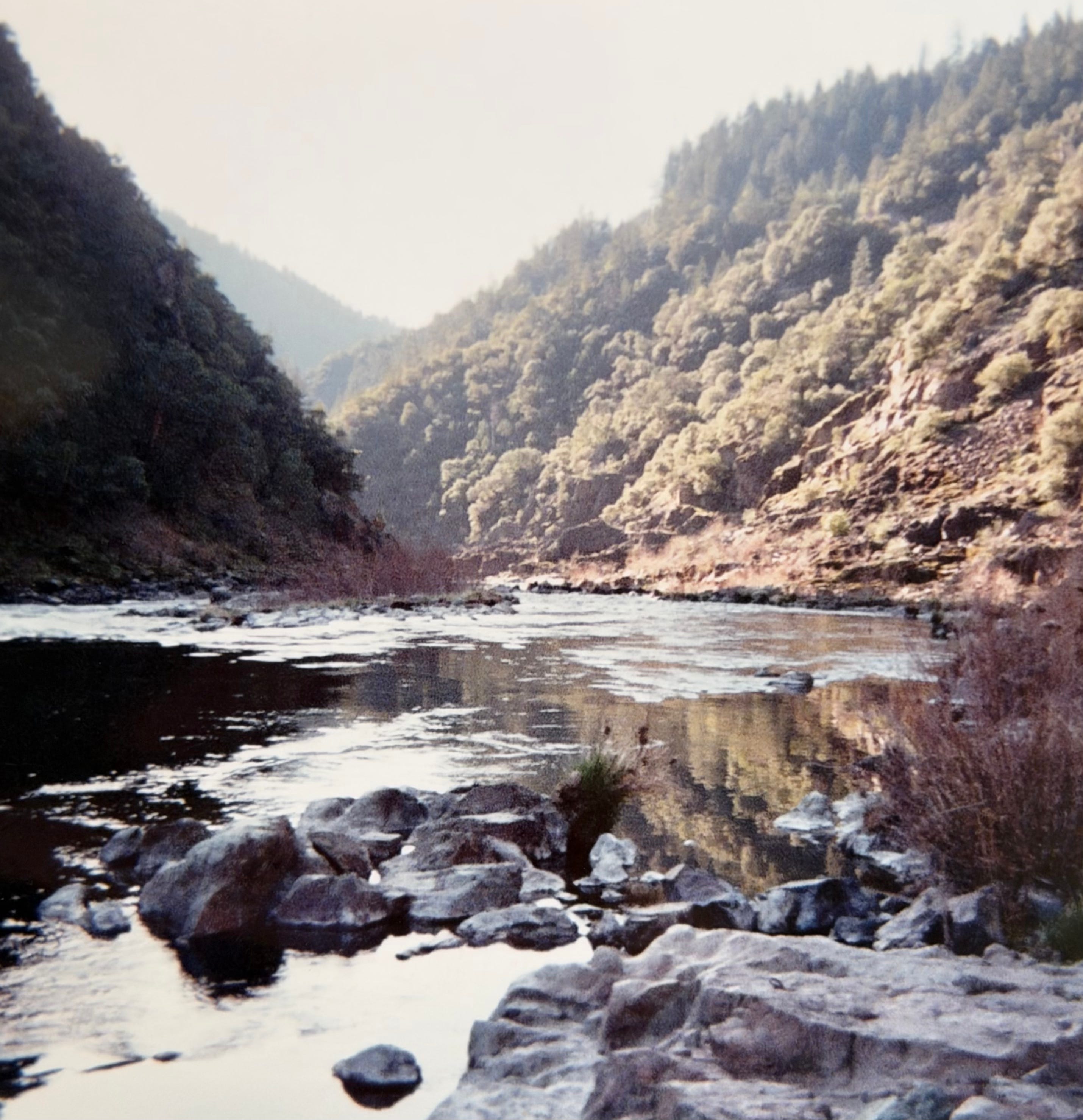
In February 2001, Travis was a kid in his early twenties splitting his time between an auto body shop and a drift boat. I was a 25-year-old trout fisherman who had more or less given up on steelhead. Neither of us knew we’d still be fishing together twenty-five years later.
Southern Oregon wasn’t part of our fishing routine. Living in the northwest part of the state, we spent our time on rivers within a two-hour drive of home, and the Rogue was twice that.
Steelhead were a mystery to me back then. I thought you needed an almost supernatural talent to catch them. On trips to coastal streams, my uncle would hook fish after fish while I stood next to him casting fish repellent. I was frustrated with the sport and was happier wading trout streams with my fly rod.
It wasn’t until a friend came back with a report from the Rogue that I became open to trying again.
“You’ve got to go check this out,” he said. “We caught eight big steelhead yesterday. It was incredible.”
“That’s impossible!”
He laughed. “Trust me. Call this number. Ask for Travis.”
So we did. A last-minute cancellation had opened two days on Travis’s calendar, and two weeks later, my dad and I were making the four-hour drive to Grants Pass.
On the drive down, we mused about the possibilities and made bets on how many fish we’d catch. We both still had our doubts. Our friend was known to exaggerate a fish story.
We soon discovered that calling this a guide operation would be generous. It was more of a family side hustle.
Travis’s dad worked days at a local auto body shop and guided for salmon and steelhead on the side. Travis worked at the same shop but had just decided to go full-time on the river. He was still holding on to part-time hours at the shop while he built a client list.
His parents lived in the country along the river, ten minutes outside town, and offered a bed-and-breakfast package for fishing guests: fishing, lodging, breakfast, and lunch on the river.
We pulled into the dark driveway around 10 p.m., let ourselves into the garage as instructed, and climbed the stairs to the apartment. We found a room with three twin beds, a TV, and a bathroom. It was bare-bones, but there was something oddly comfortable about it. We went to bed wondering what the next day would bring.
At 6 a.m., a voice called up the stairs.
“Breakfast in ten minutes.”
We scrambled into our gear and crossed to the main house. When we opened the door, the smell of bacon and coffee hit us. Travis’s mom and dad were working the kitchen like they were feeding ten people.
We sat down at the kitchen table and they loaded it up: pancakes, eggs, sausage, bacon, coffee, juice. We ate until we could barely move.
After breakfast, a truck towing a drift boat pulled into the driveway. We met Travis, climbed in, and drove a mile down the road to the ramp.
He was young and relatively new at this, but you’d never have known it from his boat. It was immaculate. Rods were stacked perfectly, and the pre-tied leaders and gear were organized and ready to go. Everything had its place. It was clear right away that his attention to detail was on another level.
He wiped down our seats and lit a propane heater before inviting us to sit.
Travis spent the next few minutes explaining the method. We would be side-drifting salmon eggs, which meant our weighted gear would bounce along the bottom as we floated downstream with the current. He described what a bite would feel like and warned that it could be hard to detect at times.
“Now, the most important rule is that you don’t set the hook until I yell ‘jerk.’”
Setting the hook on a false bite pulls the gear out of the slot he’s trying to fish and can rip the eggs off the hook. He repeated this rule a few times, which made me nervous. I had never fished this way before and didn’t want to look like a novice.
As soon as my first cast sank to the bottom, it felt like fish were attacking it, and I loaded up to jerk the rod.
“NO!” he yelled. “Take it easy. That’s just the bottom. You’ll get the hang of it.”
It wasn’t until the first fish took my bait that I understood. It felt like a slow pull, followed by a few quick tugs. While my brain was processing what was happening, a loud “JERK!” erupted from the back of the boat. It startled me into a hard hook set, and I felt the weight of a fish, then powerful head shakes. After fighting the fish through a few line-ripping runs and jumps, I brought it in for Travis to net. I had finally done what I didn’t think was possible.
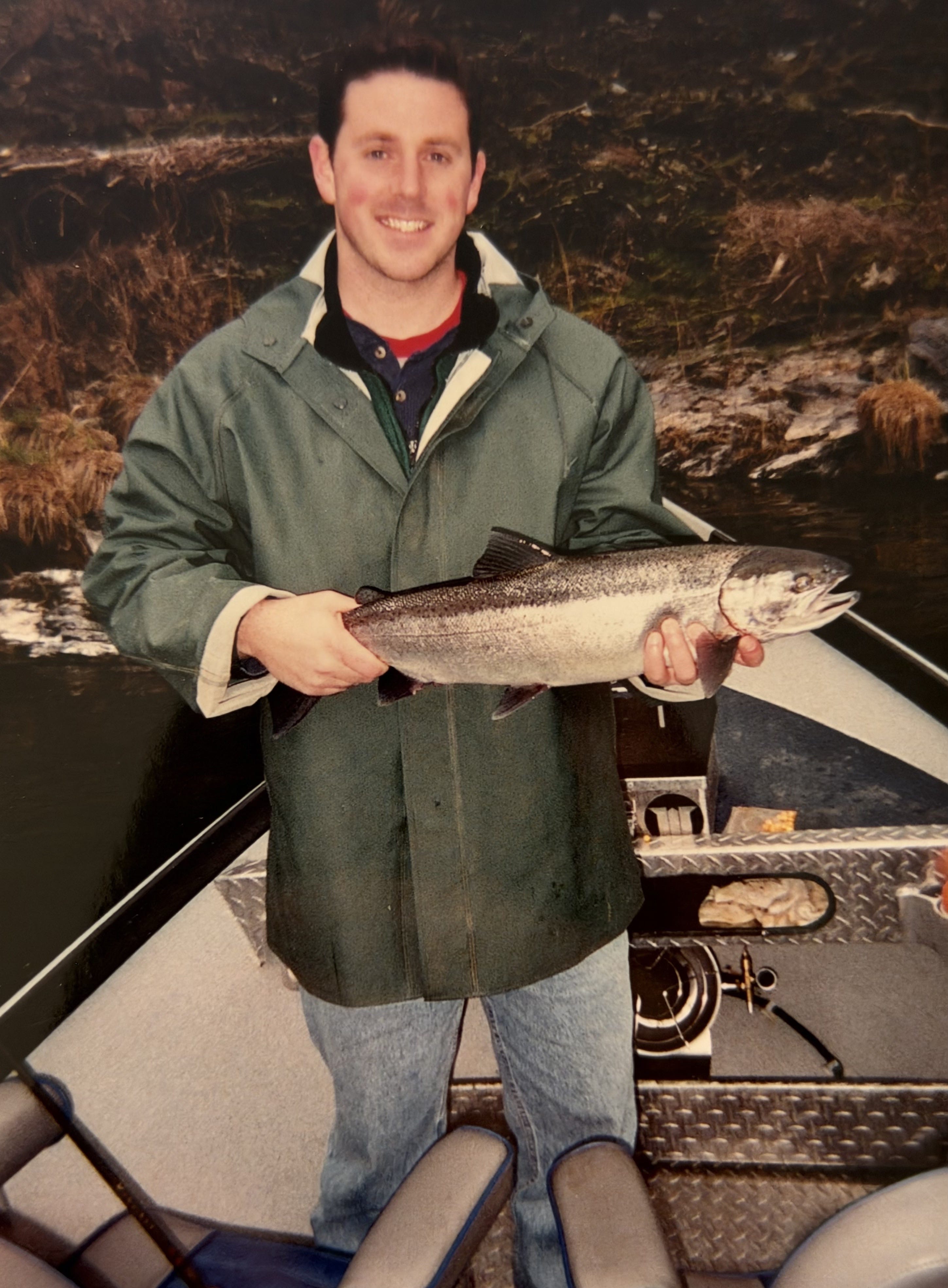
We pulled over for lunch: barbecue chicken and jalapeño bread, warmed in a compartment “oven” that sat above the propane heater. That warm riverside lunch started a tradition I still keep on my own trips: grilled chicken sandwiches and sausage dogs. I don’t have the oven setup, so I carry a portable grill in my drift boat.
Over the next two days, I watched closely: what kind of water we fished, how Travis positioned the boat, his rowing technique, and where he had us cast. Some of the water didn’t look fishy, so I asked a lot of questions. Travis was happy to answer every one. With each bite, I gained more confidence about when to set the hook. By the end of the trip, we’d landed seven large winter steelhead. We didn’t quite match our friend’s result, but I stopped doubting his stories.
I took what I learned home: first to the North Santiam, then the Deschutes, and beyond. My skills and confidence grew each year, and before long I was regularly hooking steelhead on both gear and the fly.
Over the years, we kept coming back to Travis, especially as poor runs closer to home became more common. Southern Oregon seemed to be on an island of its own, and Travis could always put us on fish.
Eventually, even the Rogue started to slip, with fewer and smaller fish at times. Then the B&B was sold, and part of the trip’s charm was lost. So we followed Travis to his next opportunity: salmon fishing on the coast. Big, bright Chinook fresh out of the ocean, the finest table fare in the world. Every August, my dad, my two brothers-in-law, and I make the long drive to Gold Beach. We traded rain gear and propane heaters for sunscreen and a coastal breeze. Our motto became: “Get out and do it while it’s still good.”
Looking back, I remember great days, like the time we landed sixteen fish. But what stands out the most are the little things: sitting around the breakfast table, watching sports in the apartment in the evenings, Travis’s dad bringing us popcorn or trying to talk us into his spicy vodka. My dad getting antsy on slow days and jerking at everything until Travis demoted him to a yarn ball, which stays on the hook no matter how many times you set it. It became a running joke. And the way Travis can still recall small details from trips years ago.
“I remember you hooked a dandy behind that log, and we had to motor downstream to chase it.”
“Your dad loves this spot. I call it ‘Steve’s slot.’”
Bob’s retired now. Travis is still rowing. And every so often, I feel the pull of a fish and set the hook before he can yell “jerk.”
I’m still a do-it-yourselfer. But I didn’t know when I started that Travis and Bob would give me things I couldn’t get on my own, things that go beyond a fish count.
And I’ll be forever grateful.
— Jason
Who taught you something you couldn’t have learned on your own? Tell me about it in comments.